Do this to get Super Insights to form your Strategy

I have a long-held dislike with surveys asking to rate on a scale of 1 – 10 with anything less than 8 being the worst. There is an optional comment field, which I suspect gets filled with 1-word praises or lengthy rants. Such data is pointless (largely) to determine what to improve.

If things were either awesome or terrible, you would know by just looking.

A restaurant doing great business will have customers lining up left, right, and center. A restaurant screwing up orders will have customers shouting left, right, and center. Data collection did zilch to know this.

What you need are qualitative insights from your users or potential customers.

Your job is to know their issues and what is meaningful to them. Why is it an issue? What will fixing it help them. You need to dive beyond the superficial answer. Surveys and interviews are terrible to get these insights. So, what should we do?

Have conversations.

Back when I was planning my grad studies in the US, I followed a playbook prescribed by seniors. It was a simple process – select universities based on rankings, budget, and your scores. Get this to 8 – 10 universities with the hope of being admitted to 3 – 4. To get to the final 10 that would be blessed by my application, I turned to their websites.

A good website meant a good university. Especially, the ones with sparse pages of faculty members went lower in my list. This was a quantitative exercise. I came up with a solid plan to be presented to my parents until I bumped into Chintan, my senior visiting after a year in the US. I was ecstatic on seeing him!

Not because he was a good friend – I barely knew him. However, I planned to apply to his university, which was in my list. It was a good school, great website, good faculty, fit my budget, and I was confident of getting in there.

Chintan was at one of the hangout places in our college. I sat with him and asked him how it was going. Over the next 30 mins or so, he shared how difficult it was for him. Studies aside, his experience was not favorable. He gave me numerous details that would have never been found on the website – the class strength, the lack of on-campus jobs, lack of research opportunities etc. I realized how big and costly my blind spots would be.

The start point of receiving these insights was a conversation.

A simple “Hi, How are you doing?” Not a survey form. Not 20 questions to be rated on a scale of 1 – 5. Just, a regular conversation between friends.

Going by what he shared, I sought similar conversations with students who were at other universities on my list. I then formed a modified list and from that chose Drexel for my MS and PhD in Engineering.

To hear another perspective, you need to watch this conversation between Jaimit Doshi and Adhar Masand. I stumbled upon this podcast recently and am in awe of how well Jaimit explains the customer discovery process.

In our world that encourages moving fast, conversations are an underrated goldmine.

As Jaimit says, only consider insights from 45-min or longer conversations. Anything less, it may have transactional data, i.e. data with lower insights.

Aim to have conversations where you let the other person open up. It isn’t so much about the place. It’s about how you make the other person comfortable.

That’s when we share what’s meaningful to us with context.

Having said that, how would you rate this newsletter on a scale of 1 – 10? 😉

Happy Ideating!

Hemang.
Your Favorite Movie Shows the Path to Terrific Insights

Can you guess the movie I’ve watched the most number of times? In a formal setting, I’d say something intellectual like Interstellar, The Matrix (all of them), Lord of the Rings, Andaz Apna Apna etc. While I’ve watched them many times, one movie rules over them all. It’s none other than one of Govinda’s super hit films – Shola Aur Shabnam.

At one point, I knew everything about that movie.

Well, it goes back to the summers where content was what Doordarshan served, which wasn’t exciting at all. Fortunately, we had a video parlor close to us. You borrowed video cassettes one at a time. The guy who ran it would drop and pick up the cassettes after 2 days. They were diligent as they had a limited stock and many bored students to serve.

In one case, he forgot to collect on time. We liked the movie and were prepared to pay late fees, which weren’t much. I believe the parlor closed and we inherited the one grand movie in my school life, Shola aur Shabnam.

It’s crazy to imagine a time where your source of entertainment was one movie.

Any time you got bored, Shola aur Shabnam went to our VCR player. Why didn’t we get other movies? We did, as a family. In other words, parental decision was involved. I was pestering them for other movies to be seen on the big screen, for ice creams, or toys. A Rs. 2 movie permission was not worth adding to the list.

What does watching one movie over and over again do?

Expectedly, you knew every dialogue. Every song. Every side character. Every cringe moment. How the story flows. What makes it work. Don’t you also do that with movies you like?

That’s the point for today’s newsletter – Total immersion.

We are drowned by stimulus in every direction – movies, books, case studies, web series, emails. When and where are you taking time to think deeply? How are you extracting insights?

Fortunes are found when you dig at one spot for a long time.

If we keep digging everywhere, we are left with a mess. Instead, think of your consumption and thinking as an oil drilling exercise. Once you find something good, immerse yourself in it.

It’s alright if it appears like you’re stuck on the same thing for eternity.

At some point, ideas will emerge naturally. Allow your real intelligence to shine in the world of AI.

Persist and keep at THE main thing.

It will be worth it.

Happy ideating!

Hemang.

Celebrating Necessity and Types of Needs

Happy Mother’s Day! In a very corny and cheesy way, today’s article bridges the gap between needs and innovation. As the popular saying goes, Necessity is the Mother of Invention.

Let’s pause and consider – what does a need mean to you?

I believe we consider them to be things we want. Like food, shelter, clothes etc. But we also want phones that never need charging. We want mangoes – if you are from my family, only the alphonso mango will do from Ratnagiri. Anything else is not meeting our needs.

If you noticed, I switched between a need and a want.

Why does it matter? If we address wants, aren’t we meeting our goals? We are but understanding the difference is the key to developing long lasting innovations.

Wants are fleeting desires. Like the wind, they can keep changing. Because of their transient nature, we are fine with a good enough solution. If you wanted Belgian dark chocolate ice-cream but got a chocolate chip ice-cream, it’s fine. We’ll get it the next time. The good enough offering won because it wasn’t a pressing need.

Instead, let’s understand needs.

They come in three flavors:

  1. Primary – these are core needs. Example – notebooks need to have binding that doesn’t fall apart in daily use.
  2. Secondary – these are nice to have. Example – the paper needs to be at least 100 gsm thick. If it’s lesser also, we’d make do.
  3. Latent – these are golden needs that we won’t ever express. Example – the paper is textured so that it feels like papyrus. Your notes have a different quality because of it.

We all will be mostly aligned on primary needs and somewhat aligned on secondary needs. The latent needs can be different because we don’t express them fully. We may not have realized at an internal level. It’s just that when someone looked at the books we like working with, the understanding dawned.

How does this understanding help us to create products or solutions?

  • Meeting primary needs is non-negotiable. That’s why every book in the bookstore has good binding.
  • The secondary needs will vary. There are some books which are printed on thin paper for optimizing budget or thickness (think phone books).
  • The latent needs make their way into the premium section. The folks who understand the customer base will design the solutions for this niche crowd, initially. As the product – market fit is established, the very solution will find a larger audience. Soon enough it will be a secondary and eventually could also become a primary need.

Solve for latent needs and you will realize innovations that the market enjoys.

How to spot them is a topic for another day. For now, I encourage you to look at the products you love and see if you can categorize the different features across the needs.

Happy Ideating!

Hemang.

To Grow You Must Read – Innovation and Insights Podcast with Aniket Rai

Reading as a habit is relevant today for both professional and personal development. In the attention war amid other distractions, it can lose out. 

This is a conversation with Aniket Rai on reading and cultivating it as a habit. Here are the highlights of this podcast episode 

➡️How we lose touch with reading as professionals
➡️We are competing against ourselves to cultivate a reading habit. Guess who are the other competitors.
➡️Book reading records and how you should prepare 
➡️Value of community and accountability groups for cultivation 
➡️How to use your organisation thank you points 
➡️Creative act by Rick https://amzn.to/4aEaBb4
➡️Why you should give more books to friends and family 
➡️When to use speed reading
➡️How to use pens to help you read better 
➡️Layered approach to reading – read, highlight,
➡️Star Framework – Share, Think, Action, Research 
➡️ReadARs Club
➡️How reading in your personal life helps your professional success

Follow Aniket Rai at https://lnkd.in/g4D5fJDn

Follow Hemang Shah at https://www.linkedin.com/in/hemang

Join his FREE newsletter at https://www.innovationsportslife.com/

Deep Dive into Innovation with Robyn Bolton

Sharing a conversation on Innovation with Robyn M. Bolton. She has collaborated with Prof Clayton Christensen and has transformed numerous industries. In this conversation, Robyn Bolton, Founder and Chief Navigator at MileZero, shares insights on innovation.

We talk about the following:

  • How to navigate ambiguous problems for innovation
  • How creativity thrives under constraints
  • Goal setting and revenue targets for innovation projects
  • What growth gaps are and how identifying them propels you to success
  • Stakeholder management and getting the team to see the joint vision
  • The portfolio approach for innovation
  • How you can use Generative AI for innovation programs

Robyn shares practical insights and this is one conversation that gets into a bit of depth.Do listen and share your thoughts.

Follow Robyn at https://www.linkedin.com/in/robynmbolton


Follow Hemang Shah at https://www.linkedin.com/in/hemang

Join his FREE newsletter at https://www.innovationsportslife.com/

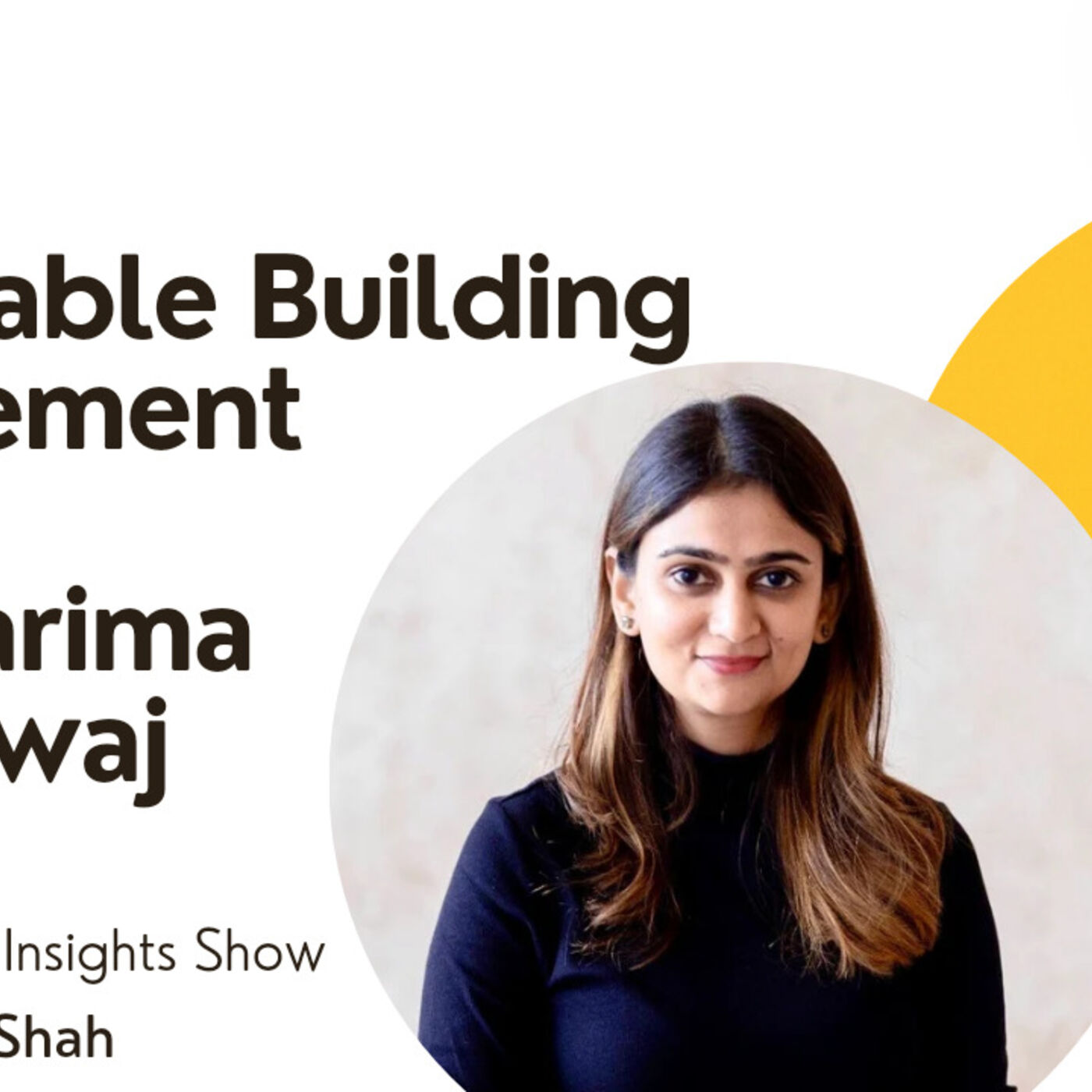
Sustainable Building Management with Garima Bharadwaj, CTO, Enlite Research

This is a conversation with Garima Bharadwaj, Co-founder and CTO of Enlite Research. In this free flowing discussion, Garima shared insights about the Building Management Systems industry.

Here are the key areas covered:

How Garima discovered the problem to address at Enlite

Difference between customers and users

How Tier 2 and Tier 3 towns are adopting tech solutions

Ramping up on technology when transitioning from FMCG to IOT

True state of a hotel's functioning

Innovation systems at Enlite

Garima's recommendations for tech founders

——-

Follow Garima at https://www.linkedin.com/in/garimabharadwaj

Follow Hemang Shah at https://www.linkedin.com/in/hemang

Join his FREE newsletter at https://www.innovationsportslife.com/

Scenario Planning to Bullet Proof Your Strategy

Grab a tea or coffee for this one. We are discussing an insight on Scenario Planning drawing examples from cricket. 

I came across this interesting article by Rick Lynch and Jay Galeota in the Harvard Business Review Guide on Strategy. It discusses 4 ways to bullet proof your strategy. However, I chose to spend time on the first one on scenario planning. We will cover it's importance, what to consider, and how to practice.

Let me know of your thoughts.

#strategy #scenarioplanning #whatif #insights 

Link to the paper: https://hbr.org/2018/10/4-ways-to-pressure-test-strategic-decisions-inspired-by-the-u-s-military

Follow Hemang Shah at https://www.linkedin.com/in/hemang

Join his FREE newsletter at https://www.innovationsportslife.com/

Paul Ruppert – Business and High Performance Strategy from Skiing Coach and Executive

Paul is a season executive in the cpass and mobile services. He has worked as a lobbyist and has a comprehensive strategic consulting background. He’s also a skiing coach for more than 25 years. I truly had a fun discussion with him ranging from sports to business strategy to books and how emerging economies are spurring new innovations.


This is an extended conversation with him on the following topics:

·       Journey into skiing

·       Hemang’s experience with Downhill Mountain Biking in Colorado – Girl Scouts Trail

·       Negotiating tricky slopes when skiing

·       Skiing Coaching levels

·       Crafting your strategy for complex situations

·       Difference between German and American armies during World War II

·       Bringing audacious goals to reality

·       Books

·       Reverse Innovation

·       Working with an open mind for projects spanning geographies


Books Paul Recommends

The Art of War by Sun Tzu: Ancient Chinese text provides profound insights into strategy, tactics, intelligence gathering and leadership. Relevant not just in war fighting but all aspects of decision making and conflict. The “OG” of strategists.


The Mind of the Strategist by Kenichi Ohmae: Pivotal work by Japanese management consultant, book illuminates art of business strategy from Eastern perspective. Emphasizes a comprehensive, integrated and holistic approach to problem solving.


Competitive Advantage by Michael Porter. Seminal text on business strategy, introduces the concept and structural rubric of the “value chain” framework for analyzing and optimizing the various elements of a business. Key to HBS (Harvard Business School) case study methodology.


Innovator’s Dilemma, plus Innovator’s DNA, by Clayton Christensen. Ground breaking works exploring how even when successful companies do everything right, they can still loose market leadership to smaller, innovative companies with disruptive technologies, usually by targeting segments or adjacencies the larger “incumbents” overlook. Innovator’s DNA is a map as to how anyone can become the disruptive market innovator. Every entrepreneur should read both.


The Prince by Niccolo Machiavelli. Thought as exclusive to political strategy, it offers great insights into the dynamics of power, leadership and psychology, with insights of morally complex, strategic decision making.


Playing to Win: How Strategy Really Works by A.G. Lafley. Penned by former CEO of Procter & Gamble, provides an “in  the trenches,” insider perspective on what it takes to create and execute a winning turnaround strategy in a complex corporate environment.


Sea Power: The History and Geopolitics of the World’s Oceans, by Admiral James G. Stavridis, US Navy. (Stavridis was four star Admiral who became Commander of NATO, later Dean of Tuft’s Fletcher School of Law and Diplomacy.). Provides an extensive exploration of the strategic significance—economically, politically, and geo-security—of the world’s oceans.  Examines how naval power, and global logistics, has shaped the history of nations and international relations.  Delves into current strategic issues such as the rise of China’s naval power, piracy, importance of maritime trade routes and the environmental challenges from c

Follow Hemang Shah at https://www.linkedin.com/in/hemang

Join his FREE newsletter at https://www.innovationsportslife.com/

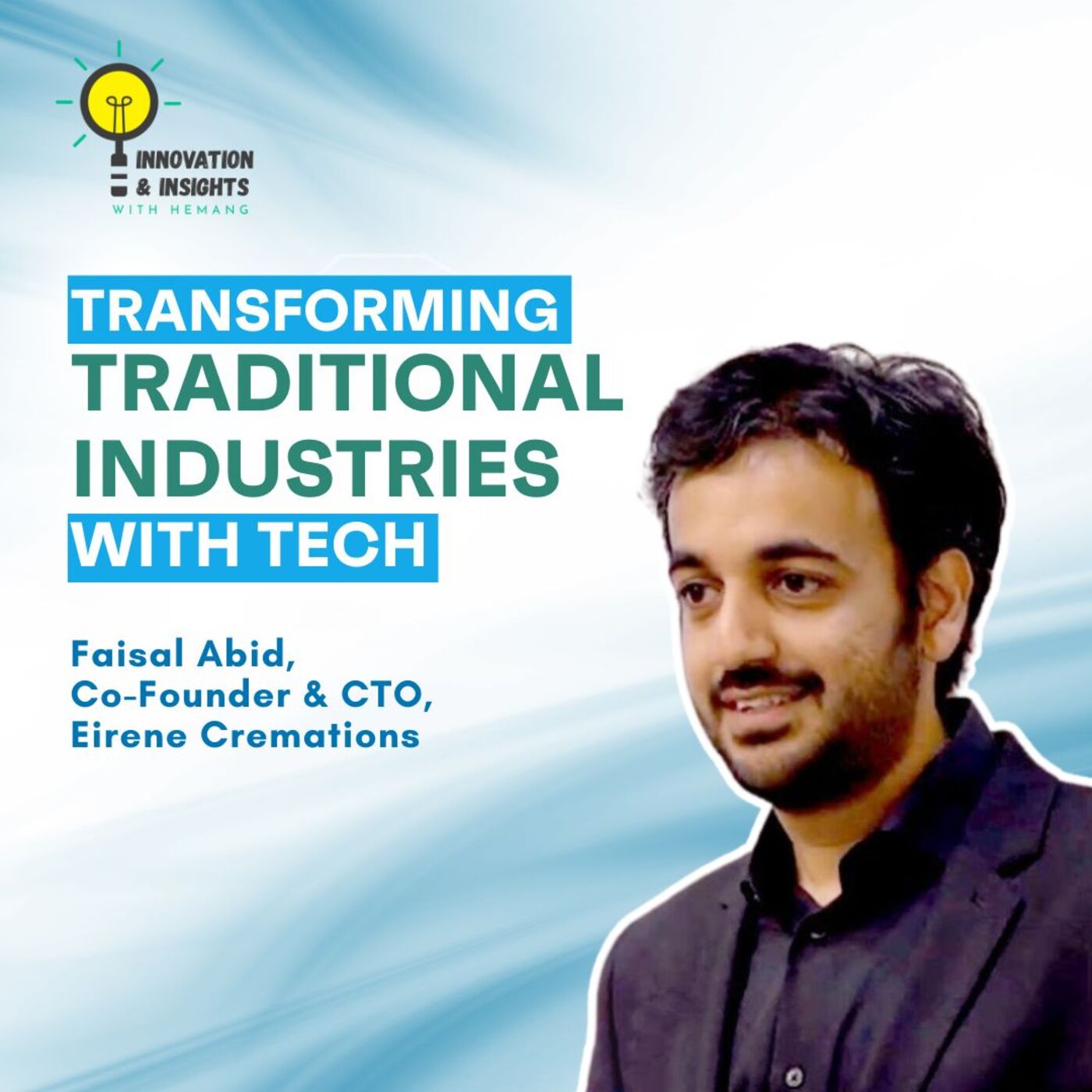
Faisal Abid on Transforming Traditional Industries with Tech

There are a lot of traditional industries where tech can play a huge role in its transformation. Using innovative approaches, the customer experience can be greatly improved. For a startup, traditional businesses are an exciting opportunity to increase market size

When the mere thought of death unsettles us, carrying out the final rites of a loved one feels unfathomable. A subject we often tend to shy away from, get to know the innovative tech startup that is changing how we approach this delicate process.

Meet Faisal, the visionary mind behind what some call the 'Uber for funerals.' His journey is not just a story of entrepreneurship; it's a tale of compassion and innovation. In this episode, we'll delve into his vision and explore the innovative problem-solving techniques he's brought to an industry that is often overlooked but deeply significant.

……………………………………………………………………………………………………

Connect with Faisal at:
https://www.linkedin.com/in/faisalabid/

Connect with me at
LinkedIn-           https://www.linkedin.com/in/hemang
Twitter-               https://www.twitter.com/hemangjshah
instagram-         https://www.instagram.com/hemangjshah/

Follow Hemang Shah at https://www.linkedin.com/in/hemang

Join his FREE newsletter at https://www.innovationsportslife.com/

Going Bananas and Taking Them Global with Aryamman Agarwaal, COO, Trident Fruits

Innovation frequently emerges from the act of reimagining the commonplace. What happens when you create an export supply chain around an everyday Indian commodity like bananas?

Join this captivating conversation as Aryamman Agarwaal unveils the remarkable journey of Trident Foods, illuminating how they are spearheading the transformation of Indian bananas into a globally valued commodity while empowering Indian farmers with knowledge and technology. We dive into product positioning, tech enablement, logistics issues and opportunities, and more.

Aryamman Agarwaal's LinkedIn Profile: https://www.linkedin.com/in/aryamman-…
……………………………………………………………………………………………………

Connect with me at
LinkedIn-           https://www.linkedin.com/in/hemang
Twitter-               https://www.twitter.com/hemangjshah
instagram-         https://www.instagram.com/hemangjshah/

Follow Hemang Shah at https://www.linkedin.com/in/hemang

Join his FREE newsletter at https://www.innovationsportslife.com/